
Last updated August 27, 2026
Free in-home measure and quote - PGT, CGI and CWS impact lines compared on your actual openings, style by style
Sliding glass doors
PGTCGI
 Before
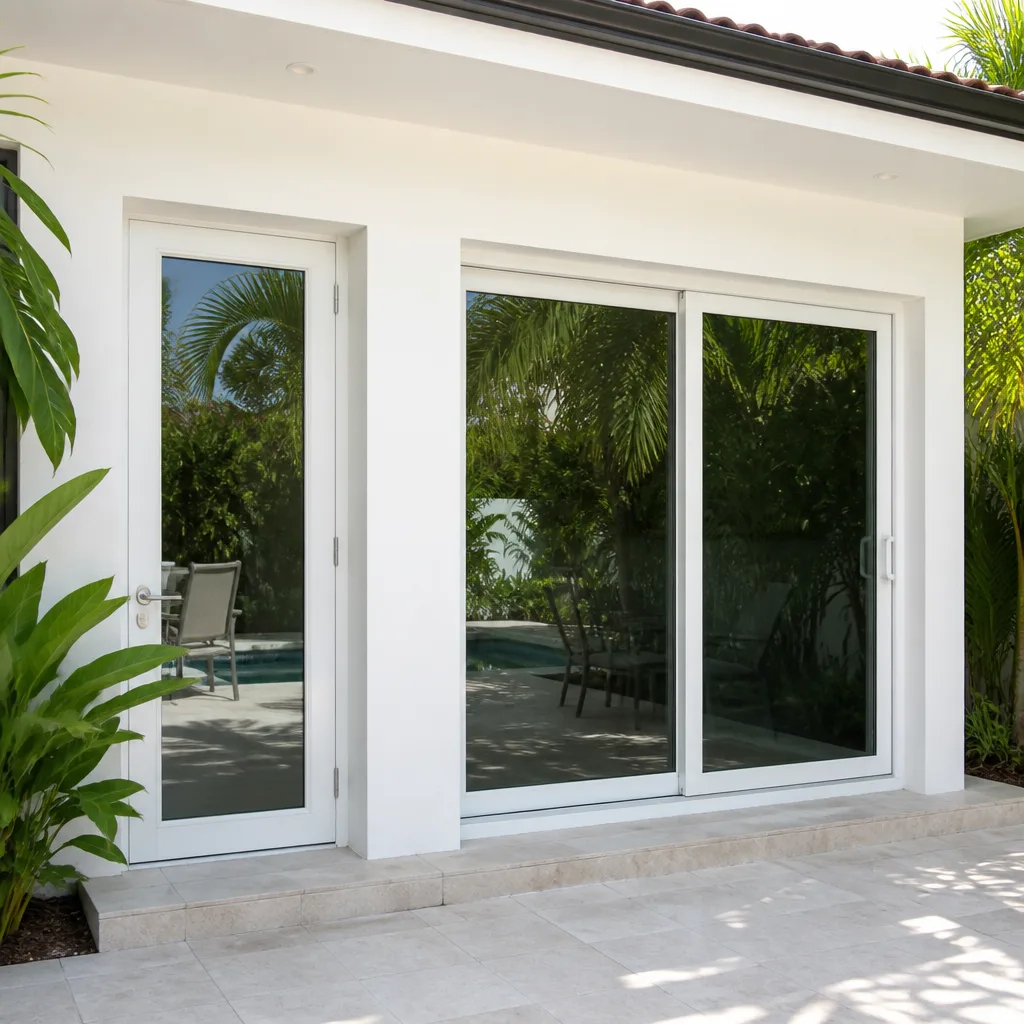 After
After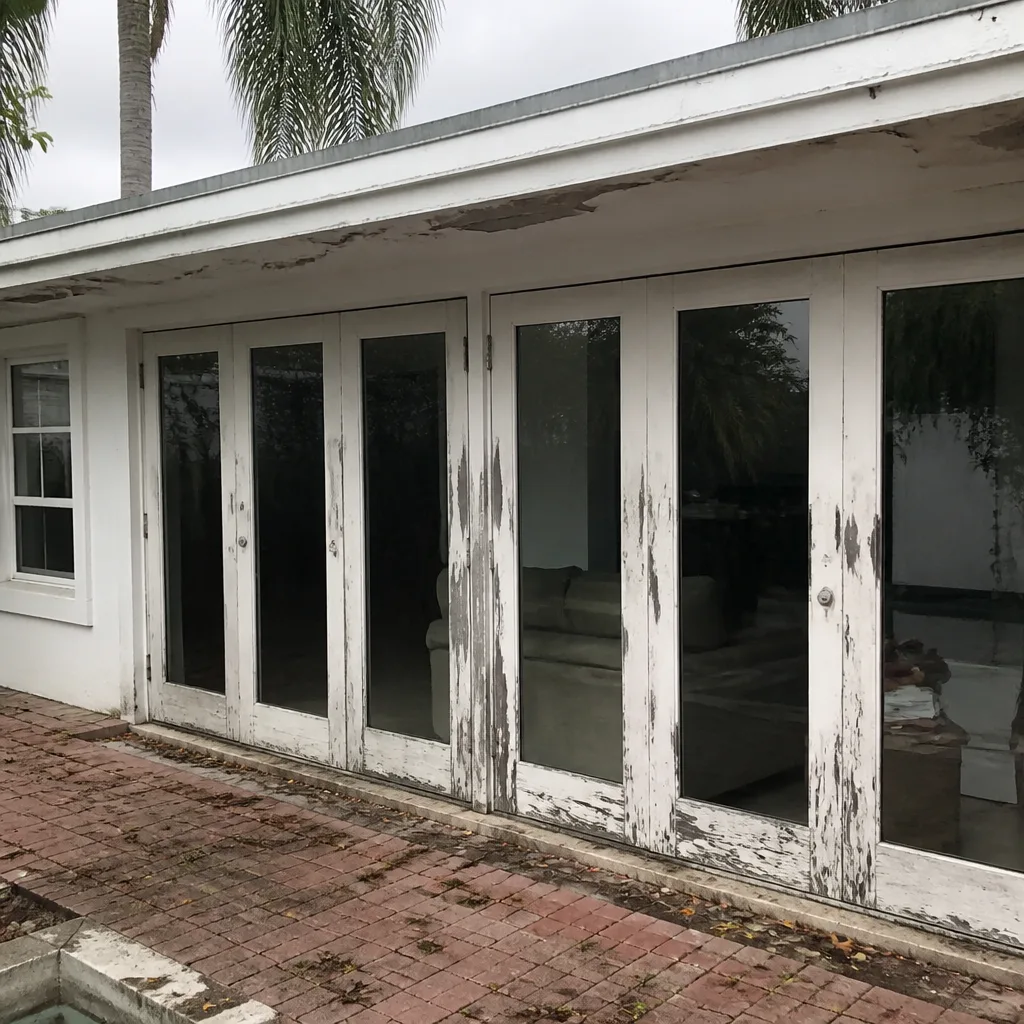 Before
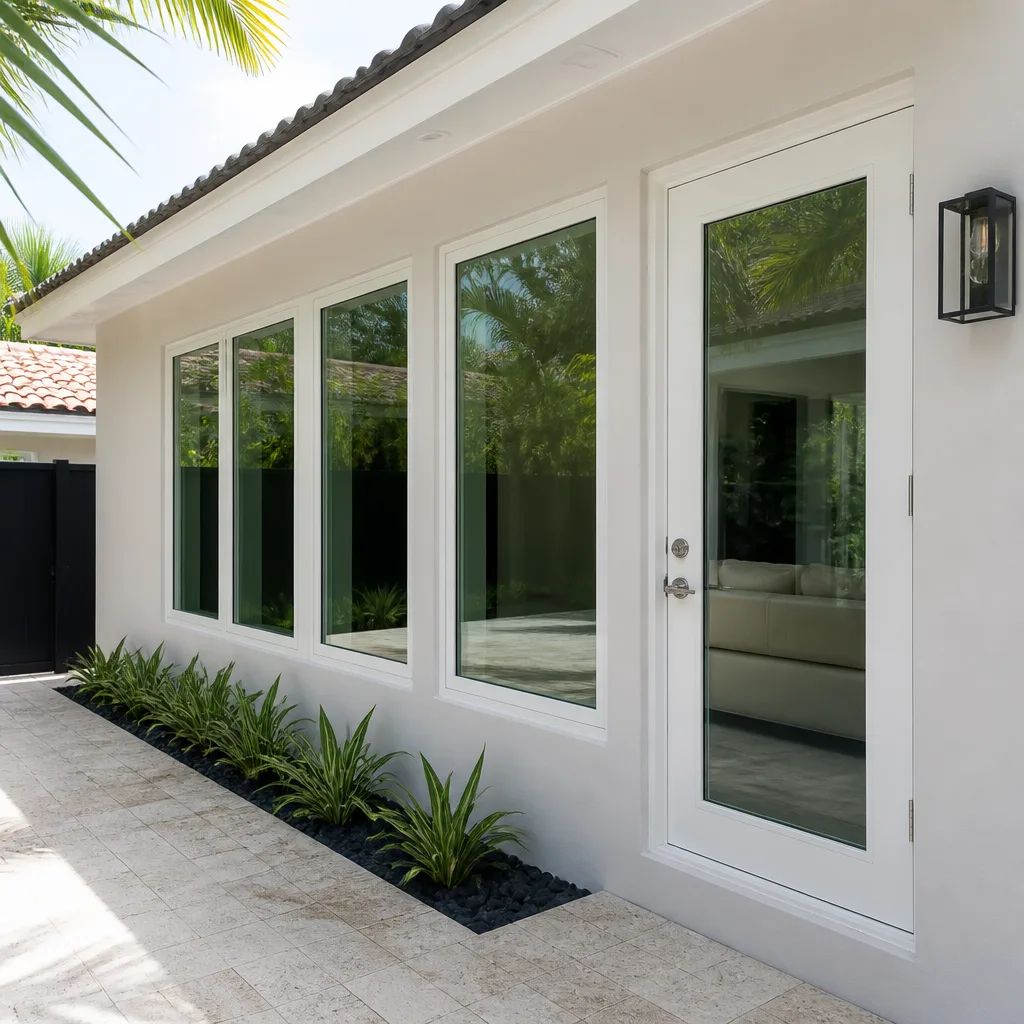 After
After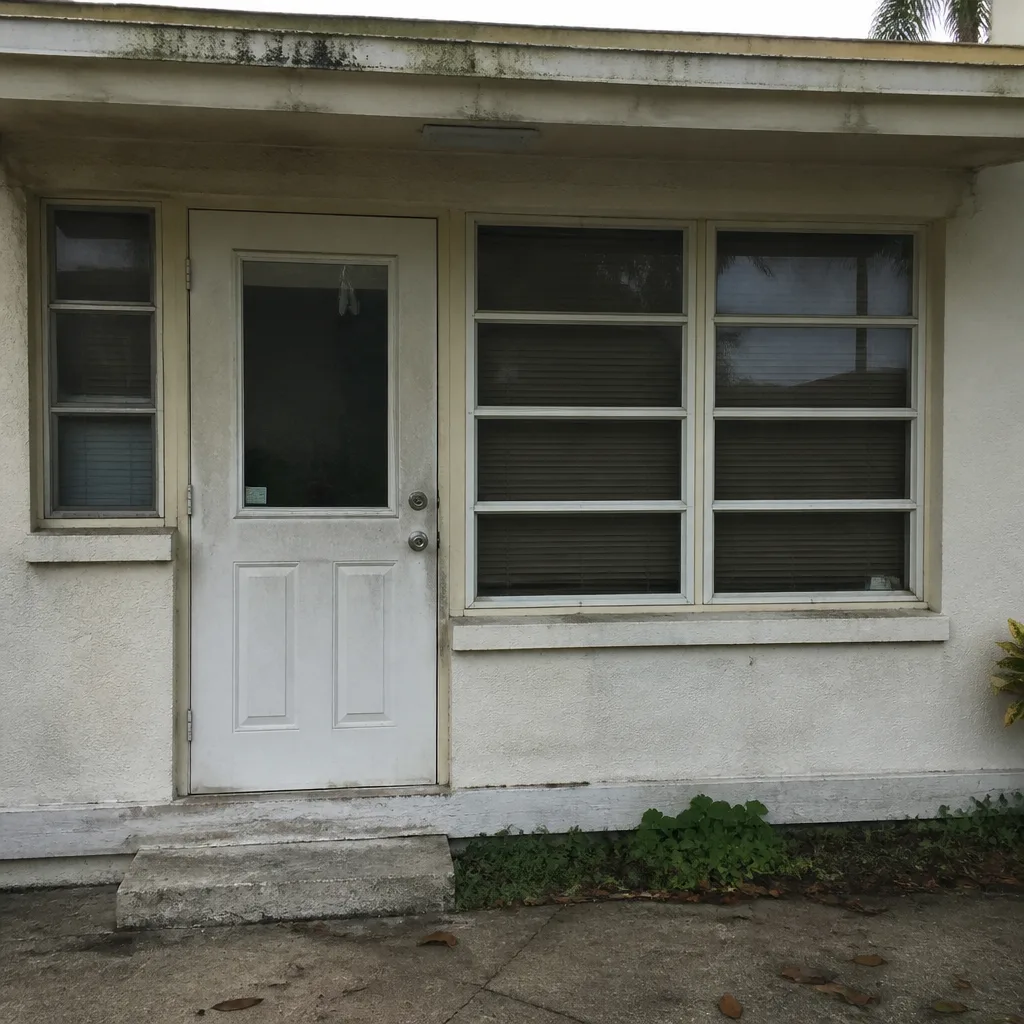 Before
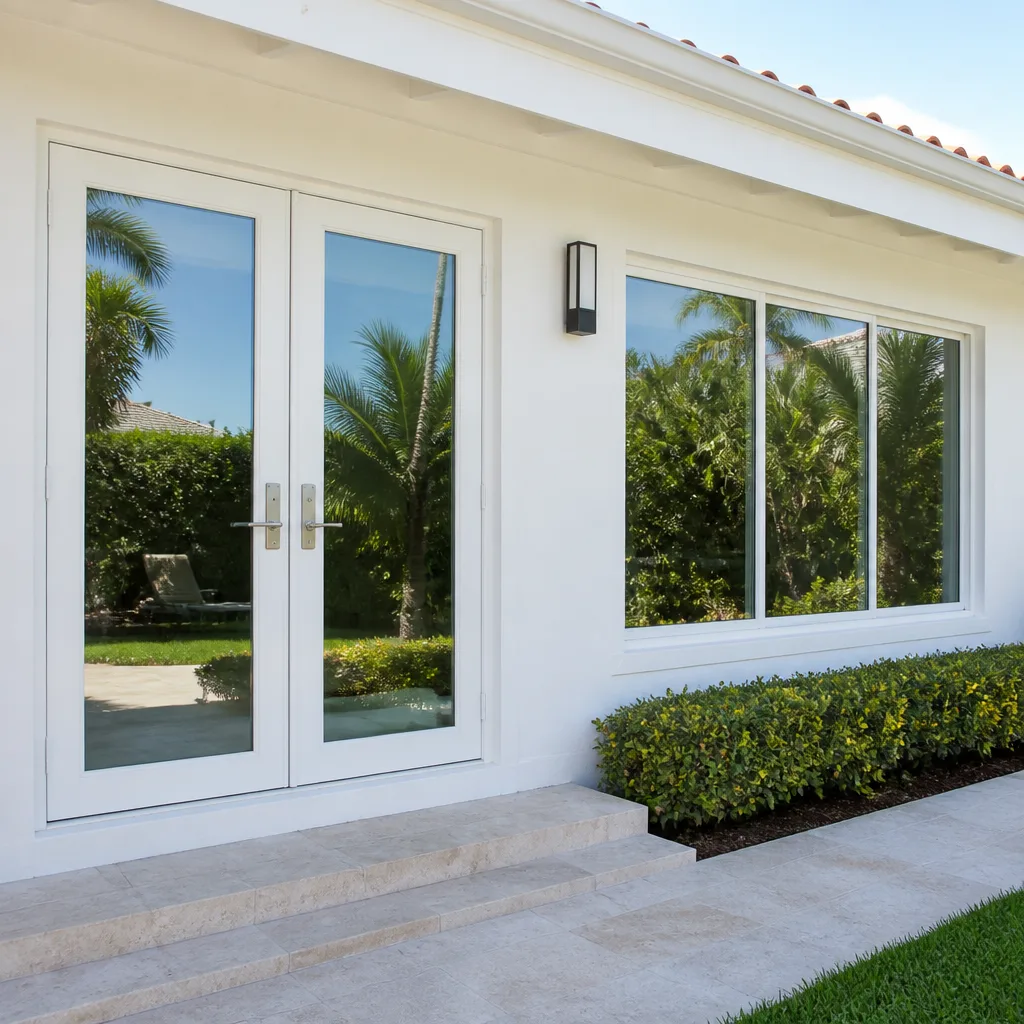 After
AfterThe Complete Guide to Windows & Doors in Miami Beach
Most Miami Beach homeowners pick a window style before they know their flood zone designation. That sequence, style first and code second, forces expensive do-overs every single month. A window that looks perfect in a showroom can fail inspection the first time a Miami Beach building official cross-references it against FEMA maps and Miami-Dade NOA requirements. This guide walks you through every decision in the order you actually need to make it, from flood zone research to final inspection, so you buy the right window or door exactly once.
Quick Answer
Windows and doors in Miami Beach FL must meet three overlapping standards: Miami-Dade NOA product approval, FEMA flood zone elevation requirements, and, in some neighborhoods, Historic Preservation Board design review. Impact-rated windows and doors are not optional for insurance purposes here: they are the baseline for coverage at any reasonable premium. Start with your flood zone and historic district status, then choose a NOA-approved product, then select material and style that will survive salt air.
Table of Contents
- Why Your Flood Zone Comes First
- Miami-Dade NOA Approval: The Non-Negotiable Standard
- Historic Preservation Board Rules in Miami Beach
- Salt Air and Material Selection: What Actually Lasts
- Impact Windows vs. Non-Impact: Insurance and Reality
- Door Threshold Heights and Glazing Specs by Flood Zone
- Energy Efficiency in a Salt-Humidity Climate
- The Installation Sequence: What to Expect Step by Step
Why Your Flood Zone Comes First
Before you look at a single window style, pull your flood zone designation from the City of Miami Beach flood map or your elevation certificate. This one data point determines your minimum glazing requirements, your door threshold elevation, and in some cases whether a particular window model is even legal on your lot. We’ve watched homeowners spend $40,000 on custom windows only to learn that the models they ordered cannot be installed at the elevation their flood zone requires.
Miami Beach splits roughly into two FEMA zones that matter for window and door work:
- Zone AE: Properties in this zone carry a Base Flood Elevation (BFE), usually measured in feet above sea level. Your finished floor and any door thresholds must sit at or above that BFE for flood insurance discounts. Windows and doors must be designed to withstand hydrostatic pressure at the specified depth.
- Zone VE: This is the highest-risk zone, common on barrier-island properties and direct oceanfront lots along Collins Avenue, North Bay Road, and parts of Sunset Islands. VE zones carry wave-action requirements on top of flood elevation. Impact glazing must be rated for both windborne debris and water pressure at the wave height designated for your specific address.
The practical difference shows up in door selection. A standard sliding glass door that clears Zone AE requirements on a mid-island home in Nautilus may fail the threshold elevation or pressure rating required for a Zone VE lot in Altos del Mar. You cannot guess this. Pull your elevation certificate first, and have a contractor who understands Miami Beach code read it with you before product selection starts.
Miami-Dade NOA Approval: The Non-Negotiable Standard
Florida has a statewide product approval system, but Miami-Dade County runs its own stricter program called NOA, or Notice of Acceptance. A window that carries a Florida Product Approval but lacks a Miami-Dade NOA will not pass inspection in Miami Beach. This is the single most common reason homeowners end up with a delivery of windows they cannot legally install.
The NOA system exists because Miami-Dade sits in the High Velocity Hurricane Zone (HVHZ), a designation shared only with Broward County. Products here must survive testing at higher wind pressures and more severe windborne-debris impacts than products tested for the rest of Florida. When a manufacturer earns a NOA, that approval attaches to a specific product line, specific glass makeup, specific frame material, and specific size range. Change any one of those variables and the NOA may no longer apply.
In our experience, this is where big-box retailers and out-of-town contractors stumble. They sell a product that meets Florida code generally, but they miss the Miami-Dade specificity. Then the homeowner is stuck with a $15,000 mistake and a contractor who has already left town. We install NOA-approved products from impact window lines in Miami Beach only, because there is no acceptable substitute for a product that passes local inspection the first time.
Before you buy any window or door in Miami Beach, ask for the NOA number. Then verify it on the Miami-Dade County product control search portal. If a contractor hesitates or cannot produce it, walk away.
Historic Preservation Board Rules in Miami Beach
If your home sits within one of Miami Beach’s locally designated historic districts, such as the Art Deco District along Ocean Drive, Collins Waterfront, or the Flamingo Park neighborhood, your window and door replacement process starts with the Historic Preservation Board, not with a contractor. You will need a Certificate of Appropriateness before you can pull permits for any exterior alteration that changes window or door appearance.
The Board cares about the visual character of your facade. That means window muntin patterns, frame profiles, the ratio of glass to frame, and the color of the visible metal or wood. Impact windows are permitted in historic districts, but they must often be styled to match the original appearance of the building. Some manufacturers build impact products with historically accurate profiles for exactly this purpose. Others do not.
Here is the order that works in Miami Beach historic districts:
- Check whether your property is in a locally designated historic district through the City of Miami Beach planning department.
- Photograph your existing windows and doors at high resolution, including close-ups of muntins, frame corners, and hardware.
- Select a contractor who has completed historic district work in Miami Beach specifically. Ask for photos of previously approved projects.
- Have your contractor prepare drawings and product specifications for the Board review.
- Submit the Certificate of Appropriateness application and wait for the agenda hearing.
- Once approval is granted, pull your permit and proceed with installation.
Skipping this step is expensive. The City can issue a stop-work order on unapproved window replacements in historic districts, and they have done so. A homeowner in Flamingo Park who replaces original casement windows with standard impact sliders without Board approval can be ordered to reverse the work at their own cost. Get the approval first.
Salt Air and Material Selection: What Actually Lasts
Miami Beach salt air is not just humid. It is a saline aerosol that penetrates frame corners, corrodes hardware, and fogs sealed glass units when materials are not rated for coastal exposure. We have replaced ten-year-old vinyl windows on oceanfront properties that looked fine in a showroom but were chalky, warped, and leaking at the sashes.
Here is how common frame materials actually hold up in Miami Beach salt air, ranked from longest lifespan to shortest:
- Aluminum-clad wood: The wood interior gives you the traditional look, while the aluminum exterior sheds salt and sun. These hold up well in Miami Beach for 30-plus years with proper installation and periodic cleaning.
- Fiberglass: Dense, dimensionally stable, and impervious to salt corrosion. Fiberglass frames handle the thermal swings of coastal sun without warping. A strong choice for Miami Beach, and one we recommend often.
- Solid aluminum: Common in Miami Beach high-rises and mid-century condos. Aluminum does not rot and handles salt well, but thermal performance is weaker unless the frame includes a thermal break.
- Vinyl: Fine inland, but in direct oceanfront exposure the UV and salt combination degrades vinyl faster than any other material. We see vinyl frames fail at the welded corners in as little as 8 to 12 years on Miami Beach barrier islands.
- Solid wood (unclad): Beautiful but impractical for Miami Beach coastal exposure. Salt air drives moisture into the wood grain, and rot follows within a few years without constant maintenance.
Hardware matters just as much. Look for stainless steel or marine-grade coated hardware on every hinge, lock, and roller. Standard zinc hardware corrodes in Miami Beach salt air faster than most homeowners expect. This is one of the small details that separates a window installation that lasts 10 years from one that lasts 30.
We install fiberglass and aluminum-clad products from manufacturers like CGI and CWS, both of which build impact-rated lines specifically tested for the Miami-Dade coastal environment. The difference shows up on the invoice, but it shows up more clearly at year 12, when the cheaper window is being replaced and the better one is still sealing tight.
Impact Windows vs. Non-Impact: Insurance and Reality
Impact windows and doors are not a luxury upgrade in Miami Beach. They are the product your insurance carrier expects to see on your home. Non-impact windows with shutters can still meet code in some situations, but the insurance math has shifted decisively toward impact glazing. Many Miami Beach carriers now decline to write policies on homes with non-impact windows unless the homeowner can prove shuttered coverage on every opening, and even then the premium difference is often enough to pay for the impact upgrade within a few years.
Here is what we tell Miami Beach homeowners about the insurance impact of each option:
- Impact windows and doors: Document every opening with photos and the NOA for each product. Submit to your carrier for wind mitigation credits. Many Miami Beach homeowners see premium reductions of 20 to 40 percent on the wind portion of their policy.
- Non-impact with shutters: A valid code path, but the credits are lower and the ongoing obligation is higher. Shutters must be deployed for every storm warning, and your insurance carrier may verify shutter condition on renewal. Missing or damaged shutters can void coverage.
- Non-impact without shutters: Essentially uninsurable in Miami Beach for wind coverage at any reasonable premium. If your home falls into this category, replacement should be your first priority, not your eventual one.
The key to capturing insurance credits is documentation. Keep every NOA certificate, every permit, and every final inspection report. Take before-and-after photos. Give your carrier a clean package and the credits follow. We have walked many Miami Beach homeowners through this process, and the ones who document carefully save real money over the life of the policy.
Door Threshold Heights and Glazing Specs by Flood Zone
Your flood zone does not just affect windows. It dictates how high your exterior door thresholds must sit above the Base Flood Elevation, and that requirement changes what door products are even available to you. In Zone VE on Miami Beach barrier islands, the threshold elevation requirement pushes many homeowners toward elevated door pans, custom ramped sills, or fully framed door systems that sit higher than standard slabs.
Here is what each Miami Beach flood zone means for door thresholds and glazing, in plain terms:
| Flood Zone | Threshold Requirement | Glazing Requirement | Common Miami Beach Areas |
|---|---|---|---|
| Zone AE (moderate) | Threshold at or above BFE; typical riser one to three feet | Impact-rated or shuttered; hydrostatic pressure rating per BFE depth | Mid-island neighborhoods, parts of Bayshore, Nautilus |
| Zone VE (high) | Threshold above BFE plus wave height; often requires elevated pan or step-up | Impact-rated for wave action and debris; pressure rating for full wave height | Oceanfront on Collins, Altos del Mar, parts of Sunset Islands |
| Zone X (minimal) | Standard threshold heights accepted | Impact-rated still recommended for wind; no flood pressure requirement | Some western Miami Beach mainland edges |
Sliding glass doors and French doors in Zone VE often require custom sill fabrication to meet elevation while keeping the threshold navigable. This is not a DIY-friendly task. A contractor who installs doors in Miami Beach without checking the elevation certificate is gambling with your flood insurance and your certificate of occupancy.
For window and door installation in Miami Beach, the elevation certificate is the first document we ask to see. Not the permit. Not the drawings. The elevation certificate. Everything else follows from it.
Energy Efficiency in a Salt-Humidity Climate
Miami Beach heat is humid heat. Your windows and doors have to do two jobs at once: reject solar heat gain during the nine months of summer, and seal tightly enough to keep salt-laden humidity out of your conditioned space year-round. A window with a great solar heat gain coefficient (SHGC) but a leaky frame is half a solution.
Three performance numbers matter for Miami Beach window selection:
- Solar Heat Gain Coefficient (SHGC): You want this low, ideally 0.25 or below for Miami Beach. The lower the number, the less solar heat passes through the glass into your home.
- U-Factor: In cooling-dominated climates, a moderate U-factor around 0.30 to 0.40 is fine. Chasing ultra-low U-factor numbers designed for northern winters adds cost without much Miami Beach benefit.
- Air Leakage (AL): This is the one most buyers ignore. Lower is always better, and in Miami Beach humidity, it is the number that determines whether your air conditioner can actually keep up in August.
Impact glass inherently improves energy performance because it is built as laminated glass, usually with a low-emissivity coating. That means the window that satisfies your insurance carrier and Miami-Dade code also reduces your cooling bill. This is one of the few places in home improvement where the safe choice and the efficient choice are the same product.
We install impact lines from ES Windows and ECO Window Systems that carry strong Miami Beach energy numbers while meeting NOA impact standards. When a homeowner calls us after a summer of $600 electric bills, the window upgrade is usually the fastest structural change they can make to bring that number down.
The Installation Sequence: What to Expect Step by Step
Window and door replacement in Miami Beach follows a sequence that differs from the rest of Florida because of the flood zone and historic district layers. Here is the order a full replacement should follow, based on what we have learned doing this work in Miami Beach since 2011:
- Flood zone verification: Pull your elevation certificate and confirm Zone AE, VE, or X with the City of Miami Beach.
- Historic district check: Confirm whether your property falls in a designated historic district. If yes, start the Certificate of Appropriateness process immediately.
- Product selection against NOA: Choose windows and doors that carry Miami-Dade NOA approval for your specific size, glass, and frame configuration.
- Permit application: Your contractor files with the City of Miami Beach Building Department, including the NOA documentation and any historic preservation approvals.
- Site preparation: Existing windows and doors are removed one opening at a time to keep your home sealed and secure overnight.
- Installation: New products are set, flashed, and anchored per Miami-Dade High Velocity Hurricane Zone requirements.
- Inspection: A Miami Beach building inspector verifies the installation against the permit and NOA. Your contractor should be present for the inspection.
- Documentation package: Collect all paperwork, photos, and the final inspection report for your insurance carrier.
This process takes time, and it should. A full-home window replacement in Miami Beach typically runs two to five days of installation after permits are approved, but the permit and approval phase can take weeks depending on historic district status and current City review times. Plan ahead, especially if you are doing this work during hurricane season.
What Window and Door Replacement Actually Costs in Miami Beach
Window and door pricing in Miami Beach runs higher than the national average for three reasons: the products must carry Miami-Dade NOA approval, installation must meet High Velocity Hurricane Zone fastening requirements, and labor costs reflect the difficulty of working safely in coastal residential construction. Here are realistic ranges based on the work we see in Miami Beach:
- Impact window replacement (per opening): $1,200 to $3,500 for a standard impact-rated window installed, depending on size, frame material, and story height.
- Impact sliding glass door (standard 6-foot to 8-foot): $4,000 to $9,000 installed, with larger multi-panel sliders running $10,000 and up.
- Impact entry door: $3,500 to $8,000 for a fiberglass impact entry system with sidelites, depending on glass spec and hardware.
- Full-home window and door package on a typical Miami Beach home: $30,000 to $80,000, with oceanfront and historic district projects at the higher end.
These are not numbers to guess around. A written line-item quote that lists every product by NOA number, every opening by size, and every labor step in sequence is the difference between a project that stays on budget and one that balloons mid-installation. For window replacement in Miami Beach, we give every homeowner that written quote before any work begins. No allowances, no change orders, no surprises on the final invoice.
The honest answer on cost is that Miami Beach code compliance is not a place to save money. A $600 window that fails inspection is a $600 loss plus the cost of buying the right one. Buy the NOA-approved product the first time.
Common Mistakes to Avoid
- Buying windows without checking the NOA database first. A Florida Product Approval is not a Miami-Dade NOA. Verify every product against the Miami-Dade portal before paying a deposit.
- Skipping the historic district check. If your Miami Beach home is in a designated district and you replace windows without Board approval, the City can stop your project and order reversal. The fine and redo cost dwarfs the approval wait time.
- Choosing vinyl frames for oceanfront exposure. Vinyl degrades measurably faster in Miami Beach salt air than aluminum-clad or fiberglass. The up-front savings disappear at year 10.
- Ignoring door threshold elevation. A beautiful sliding glass door that sits below the BFE for your Zone VE lot fails inspection and may void your flood insurance. Threshold elevation is not a design detail, it is a code requirement.
- Not documenting the upgrade for insurance. You can install the best impact windows in Miami Beach and still miss the premium credit if you do not submit the NOA, permit, and final inspection to your carrier.
- Hiring a contractor who will not be reachable after installation. Miami Beach is a small market. The contractor who cannot produce a local address, local license, or local references before installation will not answer your call when a seal fails at year two.
- Replacing all windows and doors at once without understanding the permit sequence. A full-home replacement can leave your home exposed if scheduled poorly during hurricane season. Plan openings in sequence and keep at least one weather-secure zone in the home at all times.
When to Call a Professional
Window and door replacement in Miami Beach is not a handyman job. The product approval chain, flood zone elevation requirements, and historic district approvals are specific enough that general contractors from outside Miami-Dade routinely get them wrong. If you are seeing fogged glass, corroded hardware, water staining around window trim, or doors that no longer seal, call someone who works in Miami Beach code every day. High-tension door hardware and impact glass handling are also not safe for untrained hands. A dropped impact window is a thousand-dollar mistake and a serious injury risk.
Winslow Windows & Doors offers free estimates in Miami Beach. Call (863) 656-0462 to schedule yours, and you will get a straight answer on what your project needs and what it costs.
Frequently Asked Questions
Code allows shutters as an alternative to impact windows, but Miami Beach insurance carriers now strongly favor impact glazing, and the wind mitigation credit is much larger for impact products. Many homeowners find the premium savings from impact windows pays for the upgrade within a few years. Call (863) 656-0462 for a free estimate on impact conversion for your home.
Installation for a typical Miami Beach home runs two to five days once permits are approved, but the permit and historic district approval phase can add weeks depending on your property’s status. Plan for four to eight weeks from contract signing to final inspection. Call (863) 656-0462 and we can give you an honest timeline based on your specific address.
A NOA, or Notice of Acceptance, is Miami-Dade County’s product approval for windows and doors in the High Velocity Hurricane Zone. Products without a NOA cannot be legally installed in Miami Beach, even if they carry a Florida Product Approval. Always verify the NOA number before you buy.
Yes, but you need a Certificate of Appropriateness from the Miami Beach Historic Preservation Board before pulling permits. The Board requires new windows and doors to match the visual character of the original facade, and several impact product lines are built specifically to meet those requirements. Call (863) 656-0462 if you need a contractor who has completed historic district projects in Miami Beach.
Impact window replacement in Miami Beach typically runs $1,200 to $3,500 per opening installed, with full-home packages ranging from $30,000 to $80,000 depending on size, story height, and historic district requirements. The exact number depends on your NOA-required product and flood zone. Call (863) 656-0462 for a written line-item quote on your specific home.
In most Miami Beach homes, yes. Impact windows and doors with full NOA documentation typically reduce the wind portion of your policy by 20 to 40 percent. You must submit the NOA certificates, permits, and final inspection report to your carrier to claim the credit. We help every customer assemble that package.
The Bottom Line
The Complete Guide to Windows & Doors in Miami Beach comes down to a sequence: flood zone first, historic district second, NOA product selection third, and everything else after that. Buy impact-rated products from manufacturers like CGI, CWS, ES Windows, or ECO Window Systems, choose fiberglass or aluminum-clad frames for salt air endurance, document everything for your insurance carrier, and hire a contractor who works in Miami Beach code every day. Get the order right and you buy once. Get it wrong and you buy twice. For more guides & resources, visit our blog.
Written by Ed Winslow, Owner at Winslow Windows & Doors, serving Miami Beach since 2011.
Ready to plan your window or door project? Contact Winslow Windows & Doors today or call (863) 656-0462 to schedule your free estimate. Ed’s name is on the door, and on every job we do.
Six Reasons Homeowners Choose Winslow Windows & Doors
Impact systems engineered to design pressures up to +/-100, matched to your wind zone - your openings hold when the storm arrives.
Low-E insulated impact glass from our manufacturer lines commonly cuts monthly cooling bills 20-30%.
Laminated impact glass shuts out up to 40% of outside noise - traffic, neighbors, weather.
Monitoring services run $30-90 a month. Laminated impact glass resists forced entry around the clock, with no subscription.
Florida homeowners average around 25% savings on the windstorm portion of their policy after protecting every opening - some homes qualify for more.
A full impact package upgrades curb appeal, buyer confidence and appraised value in one project.