
Last updated August 27, 2026
Free in-home measure and quote - PGT, CGI and CWS impact lines compared on your actual openings, style by style
Sliding glass doors
PGTCGI
 Before
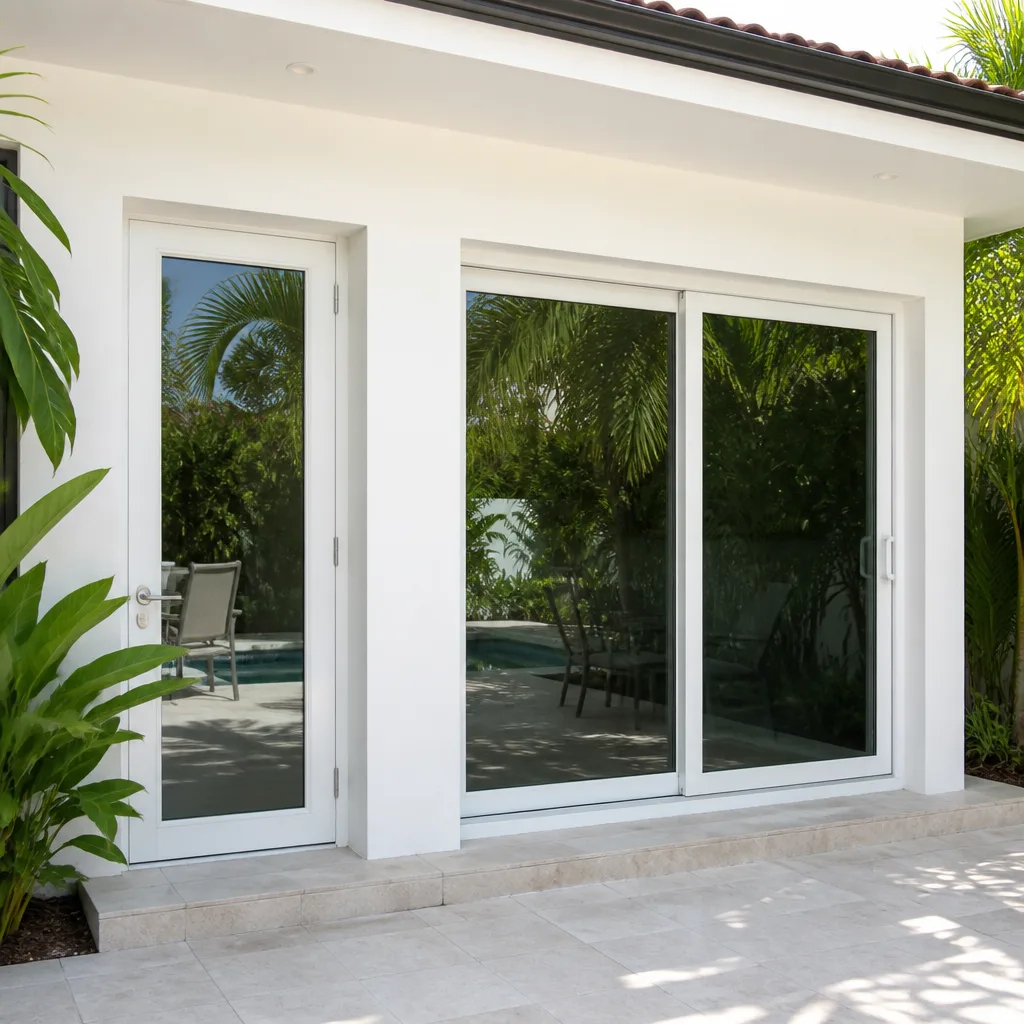 After
After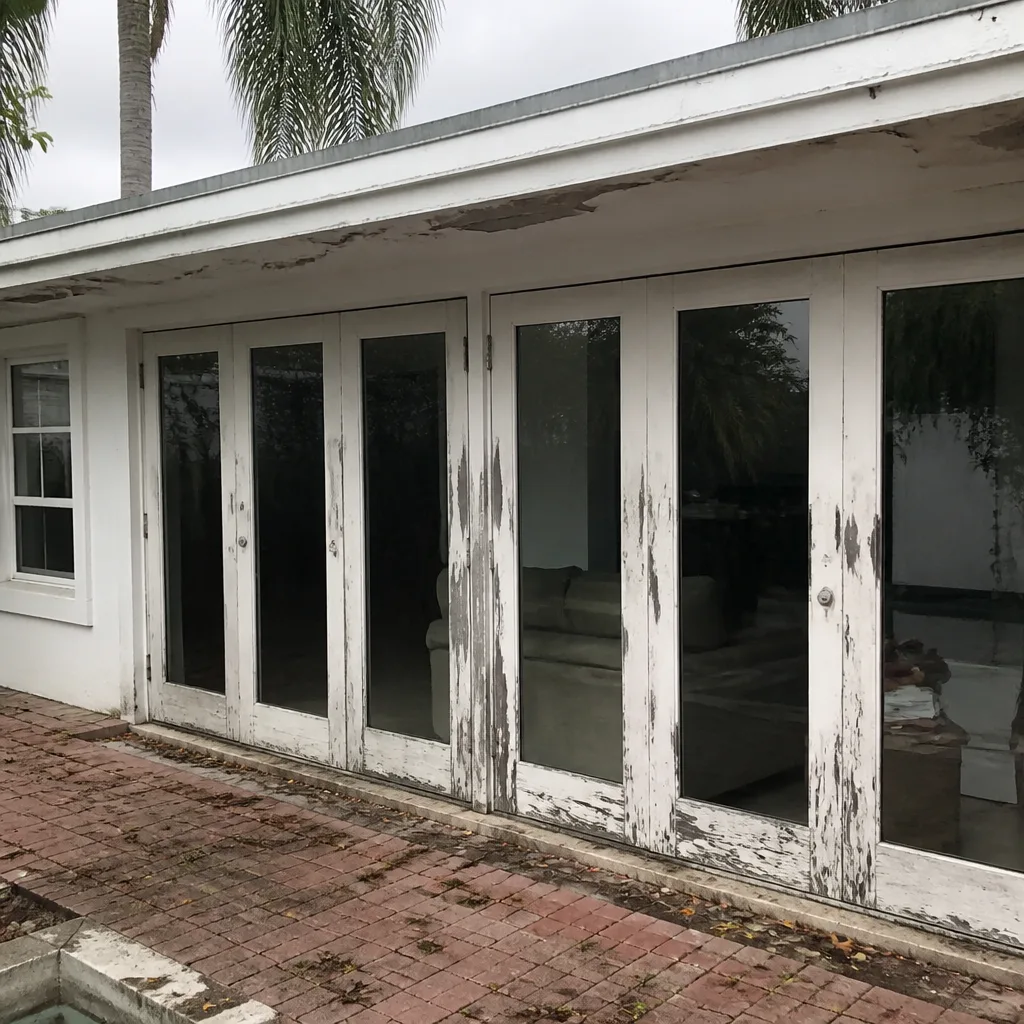 Before
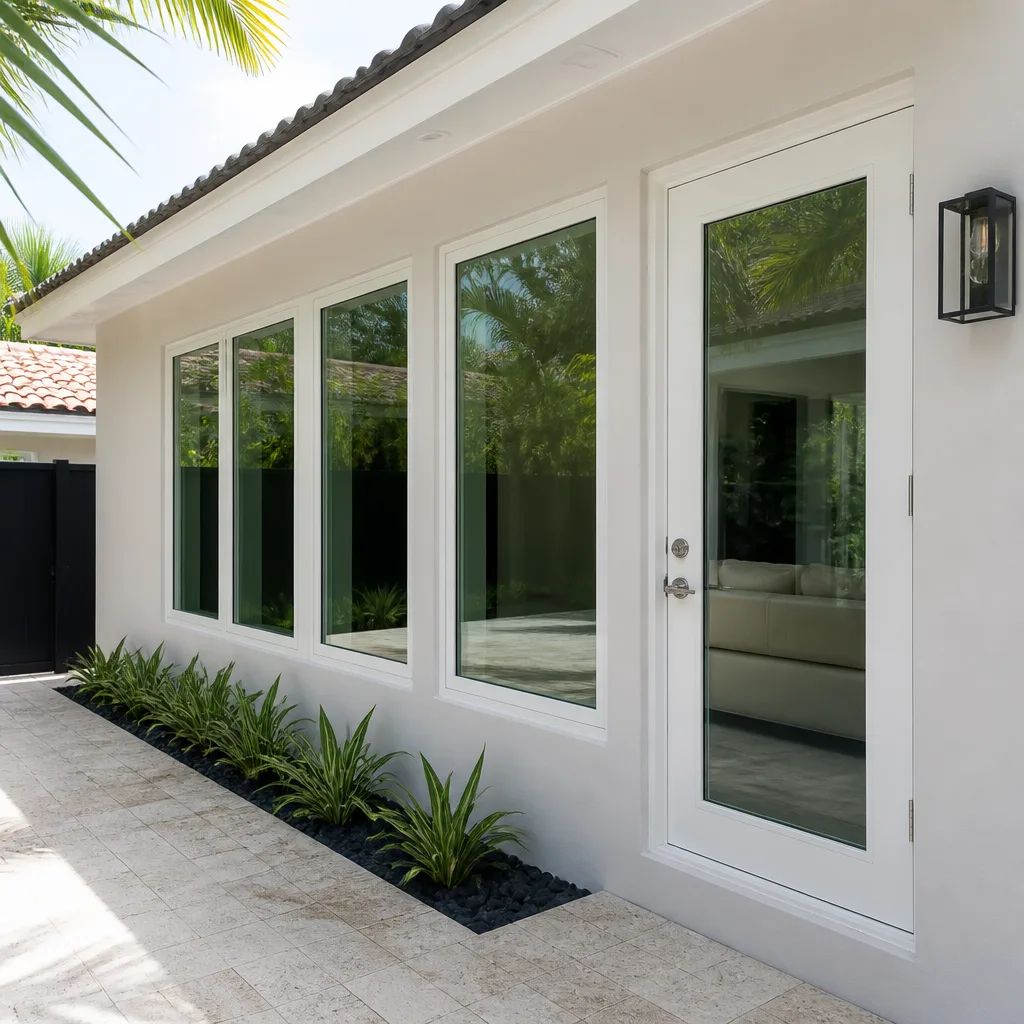 After
After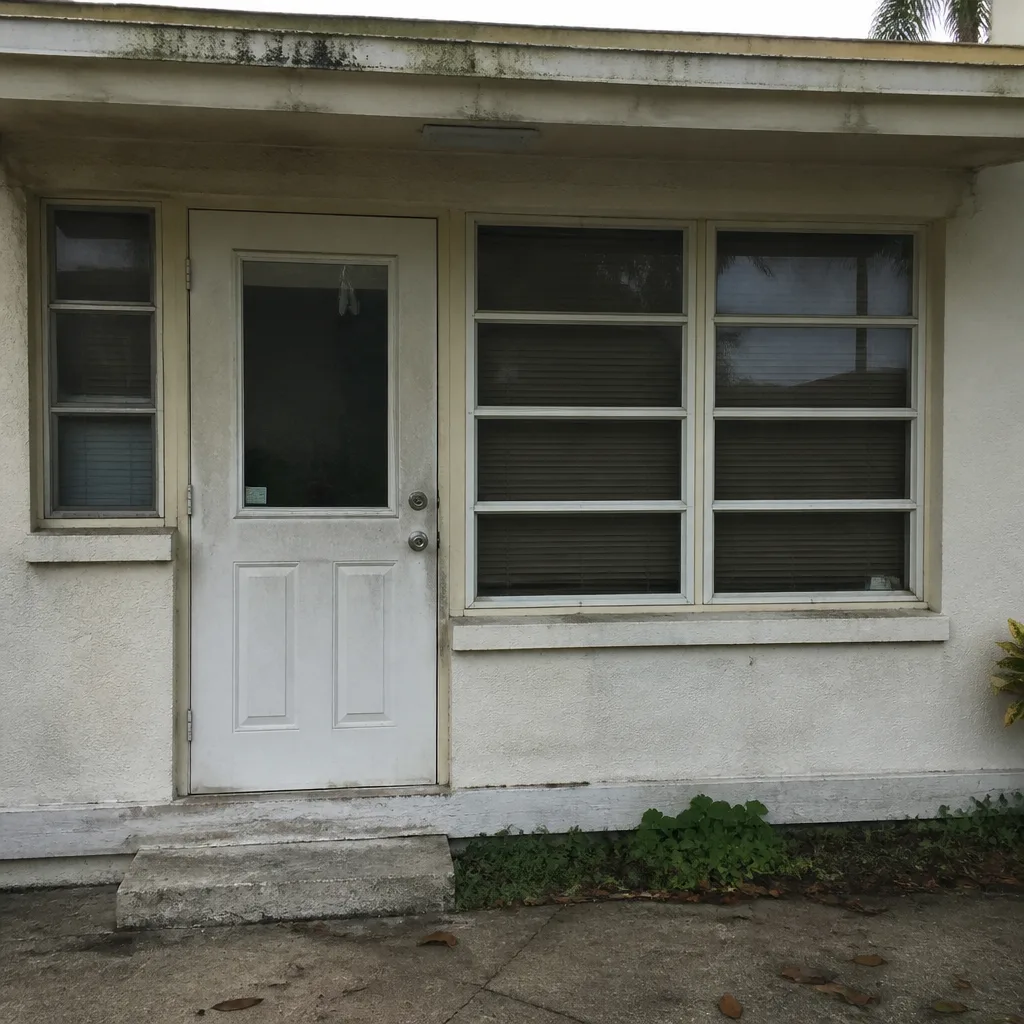 Before
 After
AfterWindows & Doors Warning Signs: A Miami Beach Homeowner’s Reference Guide
The window that rattled slightly during Tropical Storm Emily in 2023 and “seemed fine after” may have already lost its structural integrity. A hairline frame separation, invisible from the living room couch, can turn into a projectile hazard when Category 2 winds hit a Miami Beach high-rise or a 1930s bungalow off Alton Road. This guide exists because we’ve watched too many homeowners discover the truth during the wrong weather event. You’ll learn to read the subtle signals that experienced installers catch on a first walkthrough: the corrosion color that matters, the rattle that means something, and the threshold flex that predicts a flood-zone failure. By the end, you’ll know what’s cosmetic, what’s structural, and what needs a phone call before the next named storm spins up. For more guides & resources, bookmark this page-it’s the reference we wish every Miami Beach homeowner kept in a kitchen drawer.
Quick Answer
The most serious window and door warning signs in Miami Beach are usually invisible to an untrained eye: white powdery oxidation that has turned to penetrating pitting on aluminum frames, hazing between double-pane glass that signals a broken thermal seal and compromised impact integrity, and door thresholds that flex or show rust staining from flood-zone water exposure. A rattle is not just a rattle. Fog is not just fog. In a hurricane-rated unit, these are structural warnings, not cosmetic quirks. If any of the signs below sound familiar, call (863) 656-0462 for a free estimate from someone who walks Miami Beach properties daily.
Table of Contents
- The Corrosion Question: Cosmetic Oxidation vs. Structural Corrosion
- The Three Sounds That Tell You a Window or Door Is Failing
- Door Threshold and Pan Failure in Miami Beach Flood Zones
- Fogging and Hazing: What It Actually Means for Impact Performance
- Hardware Wear and Out-of-Plumb Doors: The Insurance Inspection Flag
- Thermal Seal Failure: The Quiet Energy Leak Hurricane-Rated Units Hide
- A Five-Minute Walkthrough: The Order We Check Things In
- Common Mistakes to Avoid
- When to Call a Professional
- Frequently Asked Questions
- The Bottom Line
The Corrosion Question: Cosmetic Oxidation vs. Structural Corrosion
In Miami Beach, salt air works on aluminum frames the way a slow tide works on a seawall. You cannot stop it. You can only judge whether it has moved past the surface. The distinction between cosmetic oxidation and structural corrosion is one of the most useful things a coastal homeowner can learn, because the two require entirely different responses. One needs cleaning. The other needs replacement. And they look similar enough that most homeowners get them confused for years.
Cosmetic oxidation shows up as a chalky, uniform white or gray film that wipes off with a finger. It sits on the surface. It feels powdery. It does not leave a mark when you rub it. This is what aluminum does when salt air interacts with the protective anodizing or paint finish. It is ugly. It is also, in the strict sense, harmless. A homeowner who wants to keep a frame looking sharp can clean it, and the window will perform fine for years.
Structural corrosion is a different animal. The tell is color and texture: brownish-orange staining beneath the white powder, pitting that feels like small craters under your thumbnail, flaking that exposes raw metal, and powdery residue that reforms quickly after cleaning because the corrosion is eating from inside the extrusion. When you see pitting at frame corners, where two extrusions meet, or around the weep holes where water drains, the frame is losing cross-sectional thickness. In a Miami-Dade rated impact window, that thickness is load-bearing. You cannot see the loss from the outside. You can only infer it from the texture.
We’ve pulled frames off South Beach condos that looked tired but solid from across the room, only to find interior corrosion channels you could work a key into. The window still operated. It still locked. It was also no longer certifiably impact-rated, because the aluminum that holds the laminated glass during a pressure event was thinner than the design assumed. The owners had no idea. They had been wiping off the white powder for years and assuming everything was fine.
Here is the practical rule: if the oxidation wipes clean and leaves smooth metal, it is cosmetic. If it leaves a pit, a stain, or a rough crater, it is structural, and that window needs a professional evaluation. The difference between a $40 cleaning and a window replacement in Miami Beach is sometimes the width of a thumbnail impression.
The Three Sounds That Tell You a Window or Door Is Failing
Sound is the most underused diagnostic tool in a homeowner’s kit. Your windows and doors are constantly sending you information about their structural condition. Most people dismiss the noises as “the wind” or “the building settling.” Here is what the sounds actually mean, from least serious to most serious, in a Miami Beach context where wind events are not hypothetical.
Sound One: The Soft Rattle of Glass in Wood or Vinyl Stops. This is the most common and least alarming sound. A gentle rattle when you tap the glass, or when a garbage truck rumbles down Meridian Avenue, usually means the glazing bead or stop has loosened slightly. The glass is seated fine. The impact performance is intact. This is a maintenance item: a technician tightens or replaces the glazing stops, and the rattle goes away. We fix this in a single service call. It is not a replacement scenario.
Sound Two: The Metallic Tap of a Frame Against a Sash. When you hear a sharp, metallic click or tap when opening or closing a window, or when wind gusts hit the window and it makes a tinny sound like a loose metal bracket, the hardware has worn. In aluminum impact windows, this is usually the locking points or the hinge carrier. The window still locks. The window still holds. But the hardware is no longer holding the sash in the exact position the impact design assumes. Over time, that wear lets the sash shift enough to affect the seal, and in a pressure event, the hardware is what keeps the sash from separating. This is a repair warning, not a replacement warning. It is also one of the most commonly ignored noises in Miami Beach high-rises, because people assume any noise that does not leak water is fine.
Sound Three: The Low Thrum or Buzzing During a Wind Event. This is the one that matters. If you hear a low-frequency vibration, a hum, or a sustained buzzing from a window or door during a tropical storm or hurricane gust, the unit is deflecting. It is moving under pressure in a way the design does not allow. That motion means the frame has lost stiffness (often from the structural corrosion described above), the glazing seal has failed and the glass is no longer fully laminated into the frame, or the installation anchors have loosened. A Miami-Dade rated impact window is supposed to move like a unified diaphragm. If it moves like a drumhead, it is no longer certifiably rated. We’ve had homeowners describe this exact sound in the days after Hurricane Irma and again after Hurricane Ian: a window that “thrummed all night” and then seemed fine in the morning. It was not fine. The seal had failed first. The window simply had not yet disassembled.
Our advice: do not wait for the next storm to test a thrumming window. The day after a wind event, walk the perimeter of your Miami Beach home and tap every window with the flat of your hand near the corners. A solid thunk is good. A rattle-tap that sounds loose is worth a phone call. A low resonance that feels like you are tapping a drum is urgent.
Door Threshold and Pan Failure in Miami Beach Flood Zones
Miami Beach sits on a barrier island with a high water table and a stormwater system that backs up faster than it drains. FEMA flood maps shift. Tide-driven flooding on Alton Road and along Indian Creek is a recurring fact of life, not a rare event. Against that backdrop, the entry door threshold and the door pan beneath it are the weakest points in a home’s water intrusion defense, and they fail in predictable, readable patterns.
The threshold is the metal or composite saddle that spans the bottom of the door. The pan is the hidden flush tray beneath the threshold that catches what the threshold does not shed. In a properly installed Miami Beach exterior door, the pan slopes toward the exterior and drains through weep holes. In a home built before modern flood-zone codes, or a door installed on a slab that has settled, the pan often drains toward the interior or does not drain at all.
The early warning signs, in order of progression:
- Standing water on the floor after rain. This is not necessarily a threshold failure yet; it may be a drainage issue at the exterior landing. Watch whether the water pools on the exterior side of the door or seeps to the interior. Exterior pooling means drainage is slow. Interior seepage means the pan or threshold has already failed.
- Rust staining on the interior floor or baseboard adjacent to the door. This is the pan corroding from inside. Moisture is trapped under the threshold and wicking sideways. By the time rust shows on the finished floor, the pan has been leaking for months.
- Sill flex when you step on the threshold. Stand on the threshold with your full weight. A properly seated threshold feels absolutely solid, like the slab itself. A threshold that flexes, creaks, or sinks a sixteenth of an inch has lost the support beneath it, usually because water has been eroding the substrate or the shims have rotted. Sill flex precedes full water intrusion by a season or two in most Miami Beach homes.
- Mold odor in the trim around the door. By this point the water intrusion is chronic. The pan has failed, the threshold is compromised, and the door needs professional repair or replacement. The mold smell is the signature of a hidden leak that has been ongoing long enough to colonize the casing.
A door pan failure on a flood-zone property is not a maintenance item. It is a structural and insurance item. Miami Beach building code requires proper pan installation on exterior doors, and insurance inspectors do look for threshold and pan condition in the context of wind mitigation and flood coverage. We’ve replaced doors on Normandy Island where the pan had corroded into lace, and the homeowner only called because the door “was getting hard to lock.” The threshold had sagged enough to throw the strike plate out of alignment. The water damage was discovered after the threshold came up. If your home floods in a king tide event and the door pan is already compromised, the damage line on the insurance claim will be much larger than if the pan had held. This is a cheap fix relative to a full interior remediation.
Fogging and Hazing: What It Actually Means for Impact Performance
The most misunderstood warning sign in a Miami Beach home is fog or haze between double-pane glass. Most homeowners treat it as an appearance issue: the window looks cloudy from certain angles, the view is compromised, it is annoying. They live with it for years. The truth is more serious, and it has nothing to do with curb appeal.
That fog is water vapor that has entered the space between the two panes of an insulating glass unit. It means the edge seal that bonds the panes together has failed. In a standard window, that means lost energy efficiency and eventual cosmetic damage. In a hurricane-rated impact window, it means the glass unit has lost its certified integrity. Manufacturers such as CGI, PGT, CWS, ES Windows, and ECO Window Systems design their laminated impact glass as a composite system: the laminated interlayer plus the sealed air space. The edge seal is part of the structural recipe. When the seal fails and moisture enters, the unit is no longer performing to the tested standard. The pressure rating that was certified in Miami-Dade testing no longer applies to that specific unit, because water inside the airspace alters how the glass responds under load.
Here is what fogging and hazing actually look like, so you can spot it early:
- Permanent haze that does not wipe off. If the haze is on the inside surface of the glass and it cleans off, it is condensation. If it is between the panes and does not clean off, the seal has failed.
- Condensation that forms inside the airspace on cool mornings. Miami Beach cool fronts are brief, but they are enough to make trapped moisture visible. If the window fogs between the panes on a January morning and stays fogged for hours, the seal is gone.
- Droplets or mineral deposits visible between the glass. This is advanced seal failure. Moisture has been entering long enough to leave residue. The unit will not recover; it will only degrade further.
- A visible crystalline or rainbow-like pattern at the glass edge. This is the desiccant material inside the edge seal breaking down. Once you see it, the seal is fully compromised.
We want to be clear about the repair reality: a failed-seal impact window cannot be truly repaired to its certified standard. The glass unit must be replaced. This is not a sales argument; it is the physics of laminated impact assemblies. If you have fogged impact windows in a Miami Beach condo or home, call (863) 656-0462 for a free assessment. We can tell you which units need glass replacement and which are still serviceable. Getting ahead of a failed seal now beats discovering it during a storm.
Hardware Wear and Out-of-Plumb Doors: The Insurance Inspection Flag
Every exterior door in Miami Beach is working against three forces: the storm wind load, the daily sun-heat expansion cycles, and the gradual settling of a structure built on sand and limestone. Over time, these forces push a door out of plumb, which means the door slab is no longer perfectly vertical and square within the frame. The signs are written in the hardware.
Notice how a door is wearing, and you can read its plumb condition without a level:
- The strike plate is scored with a double line. When the latch bolt hits the plate at two visible height positions, the door has shifted and someone adjusted the hardware at some point. The door is drifting.
- The hinges creak and show brass dust at the pin. Hinges wear when a door hangs out of plane. The weight distribution is uneven, and the top hinge usually bears the extra load. Brass or steel dust at the hinge pin is the residue of that wear.
- The door rubs at the top corner opposite the hinge. That is the classic out-of-plumb signature. The door slab is racking, and the gap has closed at one corner while opening at the other.
- The weatherstrip is compressed flat on one side. When a door shifts, it squeezes the weatherstrip at the tight corner, permanently deforming it. You will see daylight around the loose corner and a compressed gasket at the tight corner.
- The deadbolt requires lifting or pushing the door to fully engage. This is a convenience problem, but it is also a security and insurance problem. A deadbolt that does not throw fully into the strike plate is not performing to the door’s rated standard.
In Miami Beach, an out-of-plumb door is not merely a nuisance. Wind-mitigation insurance inspections flag doors that do not close and lock squarely, because a door that is racked out of its frame provides a wider wind pressure point and a potential point of failure in a hurricane. Insurance carriers want to see doors that latch cleanly, with functional hardware and intact weatherstripping. We have walked through homes with homeowners who were told their insurance premium was rising because the inspector flagged two exterior doors. The homeowners had never noticed the doors were out of plumb; they had simply developed the habit of pushing up on the handle to lock them.
The fix is rarely just a hardware swap. If the door panel has shifted, the frame and threshold need correction, and sometimes the underlying slab settlement needs addressing. On older Miami Beach homes, minor settling is typical and usually correctable. On newer construction, a shifting door can mean the rough opening was not framed square to begin with. Either way, this is a job for a professional who can diagnose the rack, not a handyman who will just bore a new strike hole. If your door shows two or more of the wear patterns above, call (863) 656-0462 and schedule a free estimate. We’ll tell you whether you need an adjustment, a hardware update, or a full window replacement grade correction to the door and frame.
Thermal Seal Failure: The Quiet Energy Leak Hurricane-Rated Units Hide
The thermal seal is the invisible component. It is the polyisobutylene or silicone edge seal that bonds the two panes of an insulating glass unit into a single assembly. You cannot see it. You cannot touch it. And when it fails, two things happen at once: the window starts leaking energy, and the unit starts losing its structural cohesion. In Miami Beach, where air conditioning runs nine months a year and hurricanes are a known baseline, both failures cost money.
The early energy-cost signal is subtle. A homeowner might notice that a room feels warmer in the afternoon, or that the AC runs longer on the west-facing side of the house. A window with a failed thermal seal allows the humid, salt-heavy outdoor air to migrate into the airspace, which changes the insulative value. The glass surface temperature shifts. Moisture begins to condense inside. The unit becomes a thermal bridge instead of a thermal break. None of this is dramatic on day one. It compounds quietly for months.
Then the structural signal appears. The same edge seal that provides insulation also provides the mechanical bond that keeps the two panes working as one. Once moisture and salt air enter the airspace, the seal’s adhesion to the glass weakens. The glass begins flexing independently instead of as a unified assembly. In an impact window, that independent flexing is the mechanism that can cause the outer pane to fail during a wind event. The laminated impact glass is designed to catch debris on the outer pane and transfer the energy through the interlayer to the inner pane. That transfer requires the unit to be structurally whole. A compromised thermal edge means the energy transfer is incomplete, and the window’s rated impact performance is degraded.
If you live in a Miami Beach high-rise and your building’s windows are seven or more years old and have never had seal inspections, there is a real chance some units have already begun this quiet failure process. The fix is targeted glass unit replacement, not full window replacement in most cases. The frame stays. The glass gets swapped. The cost is a fraction of a new window. The schedule is typically one day for standard units. The longer seal failure goes unaddressed, the more likely the frame also begins to suffer secondary water damage at the corners, which does turn a glass-only repair into a full window installation in Miami Beach.
A Five-Minute Walkthrough: The Order We Check Things In
When we walk a Miami Beach property for the first time, we work the same sequence every time. It is fast, it is methodical, and it catches structural problems before cosmetic observations distract us. Here is the exact order, so you can do the same on your own home before you pick up the phone.
Step 1: Stand at the front entry and look at the door slab from six feet back. Does the gap between door and frame look even on both sides and across the top? An even gap of about a quarter inch is correct. A gap that tapers to nothing at the top corner opposite the hinge is the out-of-plumb signal.
Step 2: Step on the threshold with your full weight. Stand on the center, then on each end. A solid threshold does not flex. A threshold that moves even slightly is the flood-zone failure described earlier.
Step 3: Run your thumb along the bottom of each aluminum window frame, especially at the corners and weep holes. Feel for pitting, flaking, or orange staining. Cosmetic white powder does not matter. Pitting does.
Step 4: Tap the glass of every impact window near the corners with the flat of your hand. Listen. A solid thunk is good. A rattle-tap is a loose stop or hardware issue. A drumlike resonance is a structural warning.
Step 5: Look at the bottom edge of every double-pane unit from the outside, below eye level. Haze, droplets, or mineral spotting visible between the panes indicates the thermal seal has failed. Do this in the morning, when temperature differences make trapped moisture visible.
Step 6: Walk the interior and check the baseboards below every window and door. Staining, bubbling paint, or a musty smell near the baseboard tells you water is entering somewhere. The source may be the window frame, the door pan, or the exterior sealant.
Step 7: Open and close every window and door once. A smooth operation is good. A door that drags or a window that needs to be jiggled to close is signaling that something has moved out of alignment. In an impact-rated unit, misalignment affects the sealed performance even if the lock still engages.
This entire walkthrough takes five minutes. Most Miami Beach homeowners who do it find something they had been ignoring for years. Some of those things are minor. Some are not. If you find more than one or two warnings, call (863) 656-0462 and schedule a free estimate. We will tell you honestly which issues are cosmetic and which need immediate attention. Ed Winslow built this company on the belief that a homeowner who understands their home makes better decisions. The walkthrough above is that belief in action.
Common Mistakes to Avoid
- Assuming a window that survived one storm is ready for the next. Windows degrade in steps. A window can survive a Category 1 event with a compromised seal and fail during a Category 3. Surviving once is proof of nothing. In Miami Beach, every season is a stress test.
- Wiping off white powder and calling it maintenance. Surface oxidation is cosmetic, but pitting underneath the powder is structural. If you do not feel the frame with your fingertips, you are cleaning over a problem, not solving one.
- Painting over corroded aluminum frames. Paint hides visual corrosion. It does not restore the lost metal thickness, and it sometimes traps moisture and accelerates the damage. A painted frame that looked bad before the paint job will look worse after, and the window will be weaker.
- Ignoring a fogged impact window because “the AC still works.” Fog is a failed seal, and a failed seal means reduced impact performance. The energy bill is the small loss. Trading impact performance for open floor space is the big one.
- Lubricating a door latch that requires lifting the handle. If a door only locks when you lift or push it, the door is out of plumb. Lubricating the latch treats the symptom. It does not address the frame shift.
- Waiting for visible water damage before inspecting a threshold. By the time water stains show on the interior floor, the threshold pan has already failed and water has been migrating for months. The repair is now an intrusion repair, not a threshold swap.
- Replacing hardware on an impact window without checking the frame and seal. New handles and locking points on a frame that is misaligned or corroded are a bandage. The hardware will wear prematurely because the underlying geometry is wrong.
When to Call a Professional
Some warning signs are homeowner-observable and safe to monitor. Others need a trained eye and a decision. Call a professional when you find pitting corrosion on any aluminum frame, fogging or hazing between double panes, a threshold that flexes or shows rust staining, a door that needs lifting to lock, or a window that thrummed or vibrated during the last serious wind event. These are structural conditions, not maintenance items. If you are not sure whether a sign is cosmetic or structural, that uncertainty is itself a reason to call. In Miami Beach, the cost of being wrong is measured in hurricane seasons.
Winslow Windows & Doors offers free estimates in Miami Beach. Ed Winslow has been serving this community since 2011, and his name is on every job we do. Call (863) 656-0462 to schedule your free walkthrough. We will tell you what is wrong, what is fine, and what can wait. No pressure. No vague answers. That is the way it should be.
Frequently Asked Questions
Replacing a failed-seal glass unit in an existing impact window frame typically costs between $400 and $900 per window, depending on the size and the specific laminated glass specification. A full frame replacement runs significantly higher, usually $1,200 to $2,800 per window installed. We give written line-item quotes before any work begins, and we offer $40 off any repair over $200. Call (863) 656-0462 for an exact quote, and we will walk you through what your specific window actually needs.
Superficial oxidation can be cleaned and sealed, but structural corrosion, meaning pitting or metal loss, cannot be repaired to the original impact standard. Once the aluminum extrusion loses cross-sectional thickness, the window no longer meets its Miami-Dade certification. In that condition, the frame needs replacement. We install PGT, CGI, CWS, ES Windows, and ECO Window Systems frames built specifically for coastal conditions.
A flexing threshold means the support beneath the door saddle has deteriorated, usually from trapped moisture and substrate rot. In Miami Beach flood-zone homes, this pattern is common on older slabs and doors installed without proper pan drainage. The fix involves removing the threshold, inspecting and replacing the pan, and then re-setting the door. It is a professional repair, not a shim-and-caulk fix. Call (863) 656-0462 for a free estimate before water intrusion spreads to the interior floor.
Insurance coverage depends on the cause of the damage. Storm damage is typically covered; gradual corrosion, seal failure, and water intrusion from deferred maintenance are generally not. However, even when insurance will not pay, a failed impact window is a liability, not just a maintenance line item. The out-of-pocket cost of replacing a window is almost always less than the interior damage it can cause if it fails during a hurricane. We provide the documentation you need if you are filing a claim for storm-related damage.
Walk the exterior and interior of your windows and doors at minimum twice a year, ideally in May before hurricane season and again in December. Pay special attention after any wind event over 50 mph. The five-minute walkthrough described in this guide catches most structural warnings before they become failures. If you want a professional set of eyes, call (863) 656-0462 and we will schedule a free walkthrough. No trip charge inside the county.
We do, and it is a permanent 10% discount, not a limited-time promotion. Seniors and veterans qualify on every job we do. We also offer a free second opinion on any written estimate from another company, $40 off any repair over $200, and no trip charge inside the county. When you call (863) 656-0462, let us know if you qualify for the discount, and we will apply it from the first estimate.
The Bottom Line
Miami Beach windows and doors fail by degrees, and the earliest failures are the ones that hide. Corrosion that pits aluminum frames, thermal seals that break but leave the glass looking clear, thresholds that flex before they leak, and doors that drift off plumb without anyone noticing: these are the warning signs that determine whether a home survives the next hurricane with its envelope intact. Reading them early is the difference between a modest repair and a five-figure replacement and interior remediation. If any of the signs in this guide sound familiar, call (863) 656-0462 and schedule a free estimate. Ed Winslow has been walking Miami Beach properties since 2011, and he still answers the phone. The one down the road. Not the one on a help line.
Written by Ed Winslow, Owner at Winslow Windows & Doors, serving Miami Beach since 2011.
Six Reasons Homeowners Choose Winslow Windows & Doors
Impact systems engineered to design pressures up to +/-100, matched to your wind zone - your openings hold when the storm arrives.
Low-E insulated impact glass from our manufacturer lines commonly cuts monthly cooling bills 20-30%.
Laminated impact glass shuts out up to 40% of outside noise - traffic, neighbors, weather.
Monitoring services run $30-90 a month. Laminated impact glass resists forced entry around the clock, with no subscription.
Florida homeowners average around 25% savings on the windstorm portion of their policy after protecting every opening - some homes qualify for more.
A full impact package upgrades curb appeal, buyer confidence and appraised value in one project.